Del Taco - Del Yeah! Rewards
- 4.4
- Rating
- 1.00M
- Installs
- Free
- Price
 Analysis by App-foxy
When I use Del Taco - Del Yeah! Rewards, I think of it less as a general food app and more as a focused way to make Del Taco visits easier to manage. Its central idea is the Del Yeah! Rewards experience: instead of treating the app as a digital menu alone, it gives regular guests a place to interact with Del Taco before deciding what to order. That focus matters because the app is most useful when I already know I am considering Del Taco, rather than when I am comparing every nearby restaurant.
The app belongs to the Food & Drink category, is free to install, and is suitable for everyone. It comes from Del Taco IT and has built a substantial audience, with over one million installs, an average rating of 4.5 from around 67 thousand ratings, and roughly 7.7 thousand written reviews. Those figures suggest that the app is not a minor experiment; enough people use it regularly for the rewards-centered approach to be worth examining closely.
What the Del Yeah! Rewards focus changes
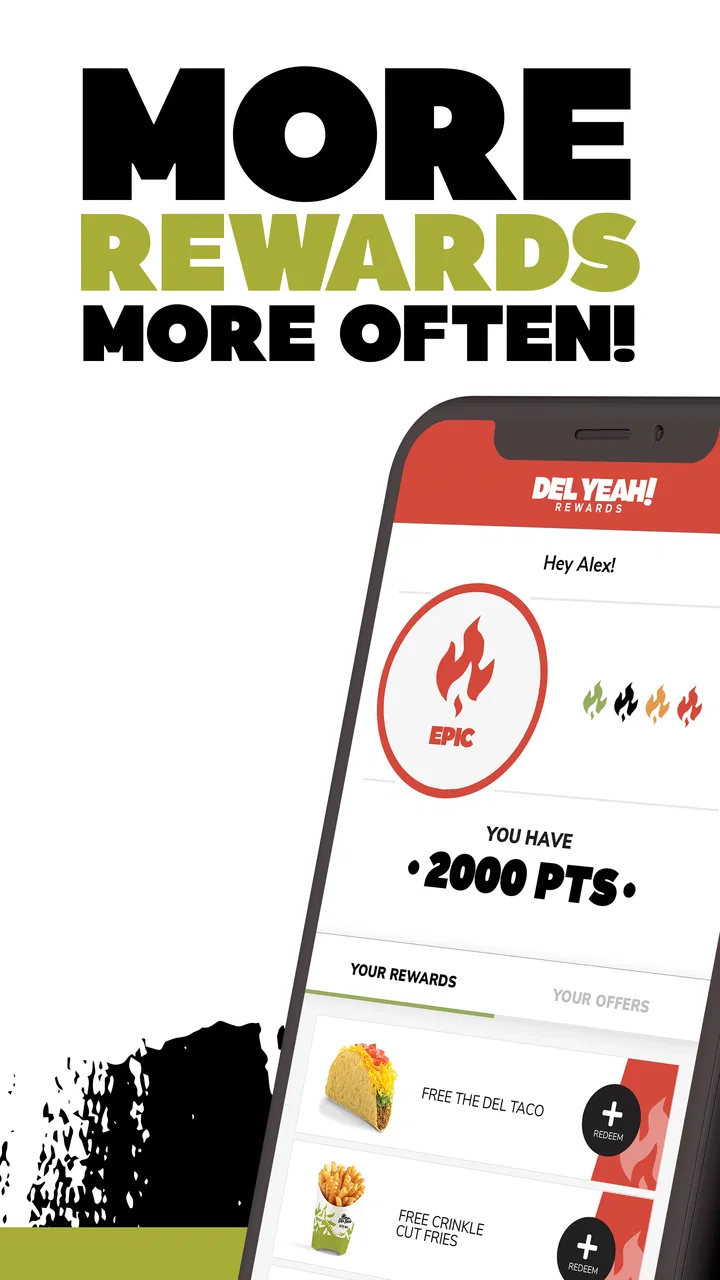
The most important capability is the rewards experience itself. In practical terms, this gives the app a purpose beyond opening a restaurant page and looking at food. I can approach a Del Taco visit with the expectation that the app is part of the ordering routine, not an optional brochure. That makes it especially relevant for people who return to the same chain often and want their digital interaction to feel connected to those visits.
You May Also Like

 Blood Strike: 2.5 Anniversary
Blood Strike’s Loadouts Turn Every Drop Into a Tactical Gamble
A close look at Blood Strike’s custom loadouts: how fast access to signature weapons reshapes its battle royale rhythm, rewards preparation, and narrows the gap between fights.

 Pandora - Music & Podcasts
Pandora’s Music Is Easy to Start, but Harder to Recover
Pandora’s strength is its low-effort path from a seed to a station. Its weak spot is how much confidence it asks you to place in connection, setup, and quiet recovery.

 8 Ball Pool
 Is Built on Rivalries, Rematches, and Routine
A close look at the rivalries, rematches, shared routines, and unanswered safety questions that turn a quick pool match into a persistent mobile community.

 Samsung Music
’s Quiet Strength Is Playing What You Already Own
Its reach comes less from spectacle than from dependable access to a personal library. That simplicity is both the app’s strongest retention engine and its ceiling.

 AccuWeather: Weather Radar
AccuWeather Review: A Quick, Clear Forecast for Everyday Decisions
For everyday plans, the best forecast is the one you can understand quickly. AccuWeather makes rain timing, radar, and local conditions easy to act on, with a few trade-offs.

 Hill Climb Racing
Why Hill Climb Racing Still Turns Crashes Into One More Run
A tiny car, a bumpy hill and one more upgrade: Hill Climb Racing keeps resurfacing because its simple chaos makes every near-miss feel personal.
More From Our News Desk



I like this kind of narrow focus when it is used deliberately. A broad restaurant app may offer many chains, but it can also make every restaurant feel interchangeable. Here, the app is built around one brand, so the experience is more direct. I do not need to search through unrelated restaurants or decide which loyalty system applies. If Del Taco is already the place I want, the app gives me a more purposeful starting point.
That does not mean the app is automatically the best option for every meal. Its value depends on how often I choose Del Taco and how much I care about handling visits through a dedicated account experience. Someone who eats at many different restaurants may prefer a general delivery or restaurant-discovery service, especially when comparing menus, delivery areas, fees, or competing offers. This app makes more sense when the decision has already moved from “Where should I eat?” to “I am probably eating at Del Taco; how should I handle this visit?”
Starting with the reward experience
My advice is to treat the first launch as setup for future visits rather than rushing straight to a single order. The useful question is not only whether the app can help today, but whether it will make the next Del Taco visit more organized. I would look through the account and rewards areas first, then decide how I want to use the app during a normal meal. This small change in mindset avoids downloading it for one quick glance and missing the reason it exists.
The app’s free price removes an obvious barrier to trying it. That is helpful for occasional guests who want to see whether a dedicated rewards experience fits their habits without committing money upfront. Still, free installation does not make the app universally valuable. The real cost is attention: I need to remember to open it, use the relevant account flow, and make it part of my ordering routine. If I only visit Del Taco once in a long while, that routine may not feel worthwhile.
How I would use it during an ordinary meal
Picture a weekday lunch when I am leaving work and want something familiar. Instead of waiting until I reach the restaurant and trying to decide everything at the counter, I can open the app while I still have a moment. I use that time to orient myself around the Del Taco experience, check what I want, and keep the rewards side of the visit in mind. The benefit is not dramatic, but it reduces the small amount of indecision that often makes a quick meal feel less quick.
For a repeat guest, the workflow can become a simple habit: open the app before leaving, review the available account or rewards information, decide whether it is useful for this visit, and then continue with the restaurant’s ordering process. The important insight is that the app works best before I am standing in line. Using it only after the meal turns the rewards feature into an afterthought, while checking it early gives me a chance to make a more informed choice about how to handle the visit.
I would also avoid assuming that every visit should be managed in exactly the same way. A planned solo lunch is a good match for a dedicated restaurant app because I have time to prepare. A rushed group order is different. If several people are changing their minds, splitting preferences, or asking me to coordinate food for them, the app may not be the smoothest tool for the whole situation. In that case, the fastest route may be the familiar ordering method at the restaurant or whichever service the group already uses.
This is one of the less obvious trade-offs: loyalty tools reward consistency, but real meals are often inconsistent. The app can be helpful when my behavior is predictable. It is less helpful when I am choosing based on whoever I am with, what is closest, or which restaurant has the shortest wait. I see that as a normal limitation of a brand-specific rewards app rather than a flaw unique to Del Taco.
Where it fits against ordinary alternatives
Compared with using a mobile browser, the dedicated app feels more intentional for repeat Del Taco visits. A browser can be perfectly adequate when I want a quick piece of information and do not expect to return soon. The app becomes more attractive when I want the Del Yeah! Rewards experience to remain part of my regular routine instead of starting from scratch each time.
Compared with a general delivery platform, the difference is even clearer. A multi-restaurant service is better when I am deciding between Del Taco and several other places, or when I want one interface for many restaurants. It may also be more convenient for people who already use that service for nearly every order. The Del Taco app has the advantage of being centered on Del Taco rather than forcing the restaurant into a larger marketplace context.
Compared with ordering directly at the counter, the app offers more preparation and a stronger connection to the rewards experience, but it also asks me to plan ahead. Counter ordering remains better when I am already inside, have a simple request, or do not want to spend time with an account-based process. I would not install this app merely to replace a thirty-second order unless I expected to return often enough for the rewards focus to matter.
Small habits that make the app more useful
My first practical tip is to check the rewards side before deciding what to order, not after. That helps me understand whether the visit is one where using the app adds value. It also prevents the common mistake of completing a meal and only then remembering that I intended to use the dedicated app.
My second tip is to make the app part of the departure routine rather than the arrival routine. Opening it while I am getting ready to leave gives me more time to think and reduces the chance that I will be distracted by a line, a crowded restaurant, or friends waiting for me. This is especially useful for a planned lunch or dinner, where a minute of preparation can make the rest of the visit feel more controlled.
My third tip is to judge it over several visits instead of one. A rewards app can seem unnecessary during a single trial because the benefit comes from repeated behavior. After a few normal Del Taco occasions, I can make a fairer decision about whether the account and rewards workflow genuinely fits me. If I still find myself ignoring it, that is useful information: a simpler ordering method is probably better for my habits.
A fourth useful habit is to separate menu curiosity from rewards management. I do not need to open the app every time I am merely wondering what food sounds good. I would use it when I am seriously considering a Del Taco visit, because that is when its focused purpose becomes relevant. This keeps the app from becoming another notification or browsing task that I open without a clear reason.
The best everyday scenario
The strongest use case is a person who visits Del Taco repeatedly and usually knows the restaurant they want before leaving home. Imagine a student with a regular evening stop, a worker who often picks up lunch nearby, or a household that returns to the same chain during busy weeks. For these people, the app can turn a familiar meal into a repeatable process: prepare before leaving, use the rewards experience as part of the visit, and avoid treating every order as a brand-new decision.
It is also useful for someone who dislikes making choices under pressure. Looking at the app before arriving gives me space to decide what I want without a queue behind me. That is a modest benefit, but it is real. The app does not need to transform the meal completely; reducing friction at the moment of ordering can be enough to justify keeping it installed.
Another good scenario is a person trying to be more deliberate about restaurant spending. A dedicated rewards app keeps Del Taco visits in one place, which can make it easier to think about whether I am choosing the restaurant intentionally or simply defaulting to it. The rewards focus may encourage repeat use, so I would balance that convenience with my actual eating habits. A reward is only useful if it supports visits I already wanted, rather than persuading me to make unnecessary ones.
Limitations I noticed in the focused approach
The biggest limitation is obvious but important: this is a single-brand app. It cannot replace a service designed to compare restaurants, discover new places, or manage a varied weekly menu. If I want sushi one day, a local café the next, and Del Taco only occasionally, installing several brand apps can create clutter without giving me much practical benefit.
The rewards-centered design can also make the experience feel less useful when I am not ready to order. A person looking for broad nutritional comparisons, local restaurant searches, or a general food-planning tool should look elsewhere. This app is not trying to be a complete food companion, and I would not use it as one.
There is also a behavioral trade-off. Dedicated loyalty apps work best when I remember them at the right moment. Forgetting to open the app before a visit can make the whole process feel less rewarding, especially if I am already accustomed to ordering directly. That means the app’s success depends partly on my memory and routine, not just on the software itself.
I would skip it if I rarely visit Del Taco, avoid account-based services, or prefer to keep all restaurant orders inside one general platform. I would also skip it if my main goal is discovering restaurants rather than managing a relationship with one chain. In those situations, the app may add another step instead of removing one.
Compatibility and everyday accessibility
The app has been available since December 8, 2016, and the current version is DelTaco 3.9.4.244. It supports Android 5.0 and later, which makes it accessible to people using older Android devices as well as newer phones. That broad compatibility is useful for anyone who keeps a dependable older handset and does not want a restaurant app to require the latest operating system.
Its Everyone content rating also makes the app suitable for a broad household audience. I would still think about who will actually use it: the rating removes an age-related concern, but it does not change the more personal question of whether a dedicated Del Taco rewards workflow fits the user’s eating habits.
The rating history is encouraging without being a reason to install blindly. Around 67 thousand ratings and about 7.7 thousand reviews indicate that many people have formed an opinion about the app, while the 4.5 average points to generally positive reception. I read that as evidence that the core idea works for a sizeable group, not as a promise that every device, visit, or personal routine will feel identical.
Who gets the most from it
I would recommend the app most strongly to regular Del Taco guests who want the Del Yeah! Rewards experience to be part of their normal ordering routine. It is particularly suitable for people who plan meals in advance, use Android devices that meet the minimum requirement, and prefer a direct brand experience over a marketplace shared with many restaurants.
It is also a sensible trial for occasional guests who are curious about the rewards approach because it is free. My recommendation would be to test it during a visit I already planned, then judge whether it makes the next visit easier. That avoids changing my eating habits merely to justify an installation.
I would point frequent restaurant explorers toward a broader food app instead. Someone who values comparison, variety, or one place for every restaurant will probably gain more from a general service. Likewise, people who always order face to face and rarely return to Del Taco may find that the app’s main capability does not compensate for the extra step of maintaining another restaurant account.
Overall, I see Del Taco - Del Yeah! Rewards as a focused tool rather than an essential app for everyone. Its strength is the way it connects a repeat Del Taco visit with a dedicated rewards experience, especially when I open it before ordering and make it part of a consistent routine. Its weakness is the same narrow focus: outside regular Del Taco use, it has little reason to stay on my phone. For the right guest, that specialization is useful; for everyone else, a simpler or broader alternative may be the better choice.
FAQs for Del Taco - Del Yeah! Rewards
01What is the Del Taco - Del Yeah! Rewards app?
The Del Taco - Del Yeah! Rewards app is a convenient platform for fans of Del Taco to earn rewards, find exclusive deals, and order food directly from their smartphone. Users can collect points with every purchase, which can be redeemed for free food and other perks.
02How do I earn and redeem points in the Del Yeah! Rewards app?
Users earn points by making purchases at participating Del Taco locations and scanning their app barcode at checkout. These points can be accumulated and redeemed for various rewards, such as free menu items. Detailed instructions on how to earn and redeem points are available within the app itself.
03Can I place an order for delivery or pickup through the app?
Yes, the Del Yeah! Rewards app allows users to place orders for both delivery and pickup. The app offers a user-friendly interface to customize your order, choose your preferred method of receiving it, and even schedule orders ahead of time for added convenience.
04Are there any exclusive deals or offers available through the app?
The app regularly offers exclusive deals and promotions that are only available to users. These can include discounts, free menu items, and special offers that change frequently. Enabling notifications ensures you won’t miss out on these limited-time deals.
05Is the Del Yeah! Rewards app available for both Android and iOS devices?
Yes, the Del Yeah! Rewards app is available for download on both Android and iOS devices. It can be found on the Google Play Store for Android users and the Apple App Store for iOS users. Make sure your device meets the app's compatibility requirements before downloading.
Pros
- Easy-to-use interface enhances user experience.
- Exclusive deals for members save money.
- Quick access to recent orders simplifies reordering.
- Customizable notifications keep you updated.
- Rewards system encourages frequent visits.
Cons
- Limited to participating locations only.
- Occasional app crashes disrupt usage.
- Account creation required for full access.
- Some delays in receiving reward points.
- In-app navigation can be slightly confusing.

Del Taco - Del Yeah! Rewards
Gallery